

[May-2024] Valid Way To Pass IFSE Institute Exam Dumps with CIFC Exam Study Guide
All CIFC Dumps and Canadian Investment Funds Course Exam Training Courses Help candidates to study and pass the Exams hassle-free!
NEW QUESTION # 115
Kendrick is a newly registered Dealing Representative for Oak Solid Financial. He has been assigned the task of contacting existing clients where there has been no record of consultation within the last 12 months. The first person he sees on his list is a client named Chandra Ruffino. He double-checks if her phone number is on the Do Not Call List (DNCL) registry. Which of the following statements apply?
- A. If Chandra has been on the DNCL registry for 18 months, then Kendrick is not allowed to contact her.
- B. If Chandra is on the DNCL, then Kendrick can only contact her if she is specifically his client.
- C. If Chandra had closed her account within the last 12 months and registered herself on the DNCL, then Kendrick cannot call her.
- D. If Chandra is on the DNCL registry, Kendrick is still eligible to contact the client of Oak Solid Financial.
Answer: D
Explanation:
Explanation
The Do Not Call List (DNCL) is a national registry of personal telephone numbers that consumers can register to reduce the number of unsolicited telemarketing calls they receive. Telemarketers are required to subscribe to the DNCL and avoid calling the numbers on the list, unless they have an exemption. One of the exemptions is for existing business relationships, which means that a telemarketer can call a consumer who has purchased a product or service from them or their employer within the last 18 months, or who has made an inquiry or application within the last six months. Therefore, Kendrick is still eligible to contact Chandra, who is an existing client of Oak Solid Financial, even if she is on the DNCL registry. However, Kendrick must respect Chandra's right to request that he stop calling her and remove her number from his contact list.
References: Canadian Investment Funds Course, Chapter 1: The Canadian Financial Services Industry1, National Do Not Call List - Canada.ca2
NEW QUESTION # 116
Danny is a Dealing Representative for Everbright Investments. He met with his client Adele, who has
$1,000,000 to invest. During their meeting Danny determines that Adele has a high-risk profile. In addition, he learns that she has an excellent understanding of equities and how volatile they can be. Danny is considering recommending growth funds specifically, and making a recommendation from the following investment options:
Based on the information provided, which mutual fund should Danny recommend?
- A. Invest equally in all 3 funds.
- B. LMN Asia Pacific Equity Fund.
- C. DEF European Equity Fund.
- D. ABC Global Equity Fund.
Answer: A
Explanation:
Explanation
Adele has a high-risk profile and an excellent understanding of equities. Therefore, it would be appropriate for Danny to recommend growth funds. However, since Adele has $1,000,000 to invest, it would be prudent to diversify her investments and invest equally in all 3 funds. This way, she can benefit from the exposure to different regions and sectors, and reduce the impact of market fluctuations on her portfolio. Based on the table, all 3 funds have the same 5-year annualized returns net of MER, which is 15%. However, they have different MERs and Sharpe ratios. The MER is the fee charged by the fund manager for managing the fund, and the Sharpe ratio is a measure of risk-adjusted return. A lower MER means a lower cost for the investor, and a higher Sharpe ratio means a higher return per unit of risk. Therefore, investing equally in all 3 funds would allow Adele to achieve a balanced trade-off between cost and performance. References:
* Canadian Investment Funds Course (CIFC) Study Guide, Chapter 4: Mutual Funds, Section 4.2: Types of Mutual Funds, page 4-6
* Canadian Investment Funds Course (CIFC) Study Guide, Chapter 5: Fixed-Income Securities, Section
5.5: Risk-Return Trade-Offs, page 5-14
* Sharpe Ratio Definition - Investopedia
NEW QUESTION # 117
Throughout the year, the Redwood Global Equity Fund generated the following outcomes:
. $1.00 per unit of interest income from Canadian treasury bills
. $2.50 per unit of dividend income from foreign corporations
. $7.75 per unit of capital gains from the sale of Canadian corporations
. $6.50 per unit of capital gains from the sale of foreign corporations
. $2.00 per unit of capital losses from the sale of foreign corporations Given that the Redwood Global Equity Fund is structured as a mutual fund trust, which of the following statements is true?
- A. Since Redwood pays the tax on foreign income, it does not distribute dividend or capital gains income from foreign sources to unitholders.
- B. Redwood can flow the foreign dividends to unitholders, who can then take advantage of the dividend gross-up and tax credit mechanism.
- C. Unitholders will receive $12.25 per unit of net capital gains from Redwood, of which only 50% is subject to tax.
- D. Redwood can distribute the $2.00 per unit of capital losses to unitholders, who can then use them to offset their capital gains.
Answer: C
Explanation:
Explanation
This statement is true because a mutual fund trust can distribute its net income and net realized capital gains to its unitholders, and avoid paying tax at the fund level. The unitholders then report their share of the fund's income and capital gains on their tax returns, and pay tax according to their marginal tax rates. In this case, Redwood has generated $14.25 per unit of capital gains from the sale of Canadian and foreign corporations, and $2.00 per unit of capital losses from the sale of foreign corporations. Therefore, its net capital gains are
$12.25 per unit ($14.25 - $2.00), which it can distribute to its unitholders. The unitholders will only include
50% of the net capital gains in their taxable income, as per the inclusion rate for capital gains in Canada1. The other 50% is tax-free.
The other statements are false because:
* A. Redwood cannot flow the foreign dividends to unitholders, who can then take advantage of the dividend gross-up and tax credit mechanism. This mechanism only applies to dividends received from Canadian corporations that are eligible for the enhanced dividend tax credit or the ordinary dividend tax credit2. Foreign dividends are treated as foreign income, and are subject to withholding tax by the source country and income tax by Canada3.
* C. Redwood cannot distribute the $2.00 per unit of capital losses to unitholders, who can then use them to offset their capital gains. A mutual fund trust can only distribute its net income and net realized capital gains, not its capital losses4. However, a mutual fund trust can carry forward its capital losses indefinitely and use them to reduce its taxable capital gains in future years5.
* D. Redwood does not pay the tax on foreign income, and it does distribute dividend or capital gains income from foreign sources to unitholders. A mutual fund trust pays tax on its foreign income only if it does not distribute it to its unitholders in the same year it is earned. However, most mutual fund trusts distribute all or most of their foreign income to their unitholders, as they want to avoid paying tax at the fund level and maintain their status as a mutual fund trust.
References:
* Canadian Investment Funds Course (CIFC) Study Guide, Chapter 7: Taxation, Section 7.3: Taxation of Mutual Funds, page 7-10
* Canadian Investment Funds Course (CIFC) Study Guide, Chapter 7: Taxation, Section 7.2: Taxation of Investment Income, page 7-4
* Foreign Income - Canada.ca
* Mutual Fund Trusts - Canada.ca
* Capital Losses and Deductions - Canada.ca
* Taxation of Foreign Income - IFSE Institute
* Mutual Fund Trusts - IFSE Institute
NEW QUESTION # 118
Janine will celebrate her 71st birthday this year. She currently has a lot of money in a personal registered retirement savings plan (RRSP) and knows there are rules about what she can do with those funds. Which of the following is TRUE?
- A. She can convert her RRSP to a registered retirement income fund (RRIF) this year or by December 31st of next year.
- B. She can take the entire amount in cash, with no tax consequences because her RRSP funds were tax-sheltered.
- C. She can convert her RRSP to a locked-in retirement income fund (LRIF).
- D. She can purchase a registered term or life annuity.
Answer: A
Explanation:
Explanation
A registered retirement savings plan (RRSP) is a retirement savings and investing vehicle for employees and the self-employed in Canada. Contributions to an RRSP are tax-deductible and grow tax-deferred until withdrawal. However, RRSPs have a maturity date of December 31st of the year in which the holder turns 71.
By then, the holder must convert the RRSP to a registered retirement income fund (RRIF), purchase an annuity, or withdraw the funds in cash (subject to tax). Therefore, B is the correct answer.
References: Registered Retirement Savings Plan (RRSP): Definition and Types, Registered Retirement Savings Plan (RRSP) - Canada.ca
NEW QUESTION # 119
When comparing mutual funds, what information would help a Dealing Representative determine a suitable mutual fund for a client?
- A. The rights a client has if there is a desire to cancel the purchased mutual fund.
- B. Referencing the fund code for each mutual fund that is being compared.
- C. Assessing historical differences in the rate of return per unit of risk of similar mutual funds.
- D. Comparing historical rates of return between different types of mutual funds.
Answer: C
Explanation:
Explanation
B is correct because assessing historical differences in the rate of return per unit of risk of similar mutual funds helps a Dealing Representative to compare the performance and risk-adjusted returns of different mutual funds and select the most suitable one for a client's risk tolerance and investment objectives. Comparing historical rates of return between different types of mutual funds (A) does not account for the risk involved in each type of fund. Referencing the fund code for each mutual fund that is being compared does not provide any information about the fund's characteristics, features, or suitability. The rights a client has if there is a desire to cancel the purchased mutual fund (D) are not relevant for determining a suitable mutual fund for a client. References: Canadian Investment Funds Course (CIFC) | IFSE Institute
NEW QUESTION # 120
Eleanora receives a $500 eligible Canadian dividend from her mutual fund. Her federal marginal tax rate for the year is 29%. Assuming the enhanced gross-up of 38% and a federal dividend tax credit of 15.02%, how much federal tax will she pay on her dividend?
- A. $96.46
- B. $115.40
- C. $189.16
- D. $69.90
Answer: A
Explanation:
Explanation
The federal tax on eligible Canadian dividends is calculated as follows:
First, the dividend amount is grossed up by 38%, which means multiplying it by 1.38. This is to account for the corporate tax that has already been paid by the company. Eleanora's grossed-up dividend is $500 x 1.38 = $690.
Second, the grossed-up dividend is multiplied by the federal marginal tax rate to get the gross federal tax. Eleanora's gross federal tax is $690 x 0.29 = $200.10.
Third, the grossed-up dividend is multiplied by the federal dividend tax credit rate to get the federal tax credit. This is to avoid double taxation of the dividend income. Eleanora's federal tax credit is $690 x
0.1502 = $103.64.
Fourth, the federal tax credit is subtracted from the gross federal tax to get the net federal tax. Eleanora's net federal tax is $200.10 - $103.64 = $96.46.
Therefore, Eleanora will pay $96.46 in federal tax on her dividend. References: How Dividends Are Taxed and Reported on Tax Returns - Investopedia, Dividend Tax Credit in Canada - TurboTax
NEW QUESTION # 121
Which statement about a net capital loss incurred by a mutual fund trust is CORRECT?
- A. Anet capital loss is passed on to the unit holders by the mutual fund in the year it occurs.
- B. Anet capital loss is permitted to be carried back indefinitely by the mutual fund.
- C. Anet capital loss is permitted to be carried forward indefinitely by the mutual fund.
- D. A net capital loss is permitted to be carried forward by the mutual fund for up to 3 years.
Answer: C
Explanation:
Explanation
A net capital loss is the excess of allowable capital losses over taxable capital gains in a taxation year. A mutual fund trust is a type of investment fund that is structured as a trust and distributes its income and capital gains to its unit holders. A mutual fund trust cannot pass on its net capital losses to its unit holders, as it can only distribute its net income and net realized capital gains. However, a mutual fund trust can carry forward its net capital losses indefinitely and use them to offset its taxable capital gains in future years. This reduces the amount of tax payable by the mutual fund trust and increases the amount of distributions available to its unit holders. A mutual fund trust cannot carry back its net capital losses to previous years, as this option is only available to corporations12. References:
Canadian Investment Funds Course (CIFC) Study Guide, Chapter 7: Taxation, Section 7.3: Taxation of Mutual Funds, page 7-103 Capital Losses and Deductions - Canada.ca1 Mutual Fund Trusts - Canada.ca2
NEW QUESTION # 122
Which among the following BEST describes a company's income statement?
- A. It shows the amount of capital contributed to the company by its shareholders or owners.
- B. It shows the amount of profit that is reinvested in the company in the form of retained earnings.
- C. It provides a snapshot of a company's financial position at a specific point in time
- D. It shows the earnings and expenses of a business over a period of time.
Answer: D
NEW QUESTION # 123
The following table shows Sabrina's earned income for the past few years: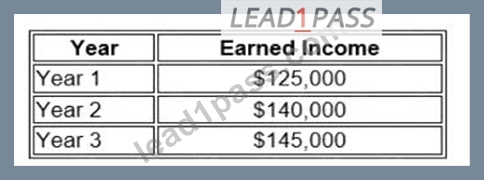
Sabrina has always maximized her RRSP contributions, so she has no carry-forward room available. If the maximum contribution limit for Year 3 is $24,270, what is her RRSP contribution room for Year 3?
- A. $26,100
- B. $22,500
- C. $24,270
- D. $25,200
Answer: C
Explanation:
Explanation
Sabrina's RRSP contribution room for Year 3 is $24,270. This is because the maximum contribution limit for Year 3 is $24,270 and Sabrina has always maximized her RRSP contributions, so she has no carry-forward room available.
References: Canadian Investment Funds Course, Chapter 5: Registered Plans
NEW QUESTION # 124
Beatrice is looking for comprehensive information regarding the analysis of financial statements and fund management expenses as it relates to her current mutual fund investment.
Which document would provide the information she is looking for?
- A. Annual Information Form
- B. Management Reports of Fund Performance
- C. Fund Facts
- D. Simplified Prospectus
Answer: B
Explanation:
Explanation
The Management Reports of Fund Performance (MRFP) are documents that provide information about a mutual fund's financial performance, portfolio composition, risk profile, and management expenses. The MRFP are prepared by the fund manager and filed with the securities regulators twice a year, for the semi-annual and annual periods. The MRFP are also made available to the investors on the fund manager's website or upon request. The MRFP include the following sections:
Financial Highlights: This section summarizes the key financial data of the fund, such as net assets, net asset value per unit, total return, ratios and supplemental data.
Past Performance: This section shows the historical returns of the fund over different time periods and compares them with a benchmark index or category average.
Summary of Investment Portfolio: This section provides a breakdown of the fund's portfolio by asset class, sector, geographic region, and top holdings. It also shows how the portfolio has changed over the reporting period.
Management Discussion of Fund Performance: This section explains the fund's investment objectives, strategies, and risks, and analyzes the factors that affected the fund's performance during the reporting period. It also discloses the fund's management expense ratio (MER), trading expense ratio (TER), and turnover rate.
Financial Statements: This section presents the fund's statement of financial position, statement of comprehensive income, statement of changes in net assets attributable to holders of redeemable units, and statement of cash flows. It also includes notes to the financial statements that provide additional information and disclosures.
The MRFP would provide Beatrice with comprehensive information regarding the analysis of financial statements and fund management expenses as it relates to her current mutual fund investment.
References: Canadian Investment Funds Course, Chapter 6: Fund Operations and Regulations1
NEW QUESTION # 125
Which among the following BEST describes a company's income statement?
- A. It shows the amount of capital contributed to the company by its shareholders or owners.
- B. It shows the amount of profit that is reinvested in the company in the form of retained earnings.
- C. It provides a snapshot of a company's financial position at a specific point in time
- D. It shows the earnings and expenses of a business over a period of time.
Answer: D
Explanation:
Explanation
An income statement is a financial report that shows the earnings and expenses of a business over a period of time, such as a month, a quarter, or a year. It also shows the net income or net loss of the business, which is the difference between the total revenues and the total expenses. An income statement helps investors and creditors evaluate the profitability, performance, and risk of a business. The other options are not accurate descriptions of an income statement. Option A describes retained earnings, which are part of the equity section of the balance sheet. Option B describes contributed capital, which is also part of the equity section of the balance sheet. Option D describes the balance sheet, which is another financial statement that shows the assets, liabilities, and equity of a business at a specific point in time. References: Income Statement - Definition, Explanation and Examples, Income Statement: How to Read and Use It - Investopedia, How to Prepare an Income Statement | HBS Online
NEW QUESTION # 126
Yesterday, Mariana who is new to investing and purchased mutual funds for the very first time. She shared her excitement with her good friend, Julius. However, after Julius learned about her investment, he admits that he had a bad experience with mutual fund investing and that he lost money. Mariana regrets not talking to Julius prior to making her decision. Her feelings of enthusiasm have changed to fear. She is wondering if it is too late to change her mind and cancel her purchase order.
Which statement regarding the right of withdrawal is CORRECT?
- A. The Canadian Securities Administrators (CSA) created legislation that addresses the right of withdrawal for investors.
- B. The Mutual Fund Dealers Association of Canada (MFDA) have written conduct rules regarding the right of withdrawal.
- C. Mariana has to wait two business after her purchase order has been settled to exercise the right of withdrawal.
- D. The right of withdrawal for investors can be different depending on which province (or territory) the fund was purchased within.
Answer: D
Explanation:
Explanation
The right of withdrawal is a statutory right that allows investors to cancel their purchase order of mutual funds within a specified period of time and receive a refund of the amount they paid. The right of withdrawal is also known as the cooling-off period or the rescission right. The right of withdrawal for investors can be different depending on which province (or territory) the fund was purchased within, as each jurisdiction has its own securities legislation and regulations that govern the mutual fund industry. For example, in Ontario, the right of withdrawal is two business days after receiving the simplified prospectus or the fund facts document, whichever is later1. In Quebec, the right of withdrawal is two business days after receiving the simplified prospectus or confirmation of purchase, whichever is later2. In British Columbia, the right of withdrawal is 48 hours after receiving confirmation of purchase3. Therefore, Mariana may still be able to exercise her right of withdrawal, depending on where she bought her mutual funds and when she received the required documents. References:
* Canadian Investment Funds Course (CIFC) Study Guide, Chapter 3: The Regulatory Environment, Section 3.2: The Right of Withdrawal, page 3-54
* Ontario Securities Commission - Mutual Funds - Buying and Selling1
* Autorite des marches financiers - Mutual Funds - Buying and Selling2
* British Columbia Securities Commission - Mutual Funds - Buying and Selling3
NEW QUESTION # 127
Bernadette has a high-paying job and is in the top tax bracket. She recently received a payment of $5 million upon the settlement of her uncle's estate. Bernadette would like to invest her inheritance in financial products that would not only grow her money but is also income tax friendly.
Which of the following would provide the most favourable tax treatment?
- A. Eligible dividends from a publicly-listed Canadian corporation
- B. Coupon payments from Government of Canada bonds.
- C. Dividends received from a large foreign corporation.
- D. Capital gains from a large Canadian corporation.
Answer: A
NEW QUESTION # 128
Which of the following statements about standard deviation is CORRECT?
- A. A standard deviation greater than one indicates a higher level of volatility than the market.
- B. Indicates how much an investment's performance fluctuates around its average historical return.
- C. Standard deviation is also referred to as beta.
- D. Measures the systematic risk of an investment relative to a benchmark index.
Answer: B
Explanation:
Explanation
The correct answer is A. Indicates how much an investment's performance fluctuates around its average historical return.
Standard deviation is a measure of how spread out the data points are from the mean value. It is calculated as the square root of the variance, which is the average of the squared differences from the mean. Standard deviation can be used to assess the volatility or risk of an investment by showing how much the returns deviate from the expected or average return. A higher standard deviation means that the investment has a wider range of possible outcomes, which implies more uncertainty and risk. A lower standard deviation means that the investment has a narrower range of possible outcomes, which implies more stability and consistency.
B). A standard deviation greater than one indicates a higher level of volatility than the market. This statement is incorrect because the standard deviation of an investment is not directly comparable to the standard deviation of the market, unless they have the same mean return. The standard deviation of an investment only measures the absolute variation of the returns, not the relative variation to the market. A better measure of the relative volatility of an investment to the market is beta, which is the ratio of the covariance of the investment and the market to the variance of the market.
C). Measures the systematic risk of an investment relative to a benchmark index. This statement is incorrect because the standard deviation of an investment does not distinguish between the systematic risk and the unsystematic risk. The systematic risk is the risk that affects the entire market or a large segment of the market, such as inflation, interest rates, or political events. The unsystematic risk is the risk that affects a specific investment or a small group of investments, such as management decisions, product quality, or lawsuits. The standard deviation of an investment captures both types of risk, whereas the beta of an investment only captures the systematic risk.
D). Standard deviation is also referred to as beta. This statement is incorrect because standard deviation and beta are different measures of risk. Standard deviation measures the absolute variation of the returns of an investment, whereas beta measures the relative variation of the returns of an investment to the market.
Standard deviation is a measure of total risk, whereas beta is a measure of systematic risk.
NEW QUESTION # 129
Xerxes, 45 years old, is a successful architect, having an annual income of $185,000. He has around $10,000 in his non-registered account, which he is looking to invest in a tax-efficient manner.
From the following options, which would be the most tax-efficient?
- A. asset allocation fund
- B. bond fund
- C. target date fund
- D. Canadian equity index fund
Answer: D
Explanation:
Explanation
A Canadian equity index fund would be the most tax-efficient option for Xerxes. A Canadian equity index fund is a type of mutual fund that invests in a portfolio of Canadian stocks that track a specific market index, such as the S&P/TSX Composite Index. A Canadian equity index fund would be tax-efficient for Xerxes because it would generate mostly capital gains and eligible dividends, which are taxed at lower rates than interest income or foreign dividends. A Canadian equity index fund would also have low turnover and minimal distributions, which would defer taxes until Xerxes sells his units. The other options are less tax-efficient than a Canadian equity index fund. A target date fund is a type of mutual fund that adjusts its asset allocation over time based on a predetermined retirement date. A target date fund would be less tax-efficient than a Canadian equity index fund because it would have higher turnover and more distributions, which would trigger taxes every year. A target date fund would also invest in a mix of asset classes, such as bonds and foreign equities, which would generate interest income and foreign dividends that are taxed at higher rates than capital gains and eligible dividends. A bond fund is a type of mutual fund that invests in a portfolio of fixed-income securities, such as government bonds, corporate bonds, and mortgage-backed securities. A bond fund would be less tax-efficient than a Canadian equity index fund because it would generate mostly interest income, which is taxed at the highest rate among different types of investment income. A bond fund would also have regular distributions, which would trigger taxes every year. An asset allocation fund is a type of mutual fund that invests in a portfolio of other mutual funds that cover different asset classes, such as stocks, bonds, and cash equivalents. An asset allocation fund would be less tax-efficient than a Canadian equity index fund because it would have higher fees and more distributions, which would reduce the net returns and trigger taxes every year. An asset allocation fund would also invest in a mix of asset classes, some of which would generate interest income and foreign dividends that are taxed at higher rates than capital gains and eligible dividends.
References: [Canadian Equity Index Funds], [Tax-Efficient Investing], [Target Date Funds], [Bond Funds],
[Asset Allocation Funds]
NEW QUESTION # 130
While assessing the suitability of an investment recommendation as a Dealing Representative, which statement applies to the "Client's Interest First" standard?
- A. The use of a risk-based approach when determining which mutual fund to recommend to the client.
- B. Presenting a fund's historical investment performance to anticipate a mutual fund's future rate of return.
- C. Accurately document Know Your Client information (KYC) so there is evidence to support a recommendation.
- D. Clarifying for clients the costs and fees associated with mutual funds and how they impact investment performance.
Answer: D
Explanation:
Explanation
The "Client's Interest First" standard requires that Dealing Representatives act in the best interest of their clients and place their clients' interests before their own or their employer's interests. This means that they must provide clear, accurate, and complete information to their clients about the mutual funds they recommend, including the costs and fees associated with them and how they affect the investment performance. Presenting a fund's historical performance to anticipate its future return is misleading and does not serve the client's interest. Using a risk-based approach to select a mutual fund is part of the suitability assessment, but it does not necessarily put the client's interest first. Accurately documenting the KYC information is important for compliance purposes, but it does not ensure that the recommendation is in the client's best interest.
References: Canadian Investment Funds Course, Chapter 8: Suitability and Know Your Client1
NEW QUESTION # 131
Your client, Kimberly has investments in both registered and non-registered plans. Which of the following investment strategies is best suited for Kimberly from a tax perspective?
- A. Include investments paying capital gains in the registered plan and foreign pay investments in the non-registered plan.
- B. Include domestic pay assets in the registered plan and foreign pay assets in the non-registered plan.
- C. Include dividend paying investments in the registered plan and interest paying investments in the non-registered plan.
- D. Include interest paying investments in the registered plan and dividend paying investments in the non-registered plan.
Answer: D
Explanation:
Explanation
According to the Canadian Investment Funds Course, different types of investment income are taxed differently in Canada. Interest income is fully taxed at the marginal rate, while dividend income is favourably taxed with a dividend tax credit. Capital gains are taxed on 50% of the gain at the marginal rate, and foreign income is subject to withholding tax. Therefore, a tax-efficient strategy is to include interest paying investments, such as bonds or GICs, in the registered plan, where they can grow tax-deferred until withdrawal.
Dividend paying investments, such as Canadian stocks or ETFs, should be included in the non-registered plan, where they can benefit from the lower tax rate and the dividend tax credit. Foreign income should also be avoided in the non-registered plan, unless it is held in a U.S. dollar account or a foreign currency hedged ETF, to reduce the impact of withholding tax and currency fluctuations.
References: 1: Canadian Investment Funds Course - IFSE Institute 2 (Unit 9: Retirement)
NEW QUESTION # 132
Ai Fen has recently become registered to sell mutual funds with Acadian Eastern Financial, a mutual fund dealer. Ai Fen determined that with her background of being a Chartered Financial Analyst, she can help people understand the nature of investing more easily than others in her field.
Which registration category will need to be prominently noted on Ai Fen's business card to comply with the
"holding out rule"?
- A. Investment Representative
- B. Dealing Representative
- C. Chartered Financial Analyst
- D. Registered Representative
Answer: B
NEW QUESTION # 133
Russell is a Dealing Representative with Wealth Quest Strategies Ltd., a mutual fund dealer and member of the Mutual Fund Dealers Association of Canada (MFDA). Russell is developing his website to include sales content on a Target Date Fund. Which of the following is Russell permitted to include on his website about the Target Date Fund?
i. the asset mix through the life of the fund until the future date
ii. the expected decline in the fund's risk level as the fund reaches its target date iii. the guaranteed return that the client will receive on the future date iv. a graphic illustration of the fund's promised growth on target date
- A. iii and iv
- B. ii and iv
- C. i and ii
- D. i and iii
Answer: C
Explanation:
Explanation
A target date fund is a type of mutual fund that adjusts its asset allocation and risk level according to a predetermined future date, such as retirement or college education. A target date fund typically starts with a higher proportion of stocks and a lower proportion of bonds and cash, and gradually shifts to a more conservative mix as the target date approaches. This is called the fund's glide path, which shows the asset mix through the life of the fund until the future date. Russell is permitted to include this information on his website, as it is factual and relevant to the fund's characteristics and suitability. Russell is also permitted to include information about the expected decline in the fund's risk level as the fund reaches its target date, as this is part of the fund's objective and strategy. However, Russell is not permitted to include any information that implies or suggests that the target date fund offers a guaranteed return or a promised growth on the future date, as this would be misleading and inaccurate. Target date funds are not guaranteed investments, and their performance depends on the market conditions and the fund manager's decisions. Russell must not make any false or exaggerated claims about the target date fund's benefits or returns on his website.
References: Canadian Investment Funds Course, Chapter 7: Know Your Product1
NEW QUESTION # 134
Every February, Reginald, a Dealing Representative, feels pressured by his Manager to generate new registered retirement savings plans (RRSP) and contributions to assist the branch in meeting broader business targets. Reginald is nearing the end of February, and he has a meeting with a new client, Orel. Orel wants to open a tax-free savings account (TFSA) to develop emergency savings because he does not want to worry about his withdrawals being taxed. Reginald suggests that if Orel were to contribute to an RRSP first, then the resulting tax savings could be used to fund a new emergency account.
In relation to account suitability, what can be said about Reginald's advice?
- A. Reginald is putting the client's interest first by informing Orel why he should change his purpose for investing.
- B. By convincing Orel to contribute an RRSP, instead of a TFSA, Reginald has put his client's interest first.
- C. Recommending an investment solution that addresses two needs is putting Reginald's client's interest first
- D. Based on Orel's stated need, recommending an RRSP contribution is unsuitable.
Answer: D
NEW QUESTION # 135
Danny is a Dealing Representative for Everbright Investments. He met with his client Adele, who has
$1,000,000 to invest. During their meeting Danny determines that Adele has a high-risk profile. In addition, he learns that she has an excellent understanding of equities and how volatile they can be. Danny is considering recommending growth funds specifically, and making a recommendation from the following investment options:
Based on the information provided, which mutual fund should Danny recommend?
- A. Invest equally in all 3 funds.
- B. LMN Asia Pacific Equity Fund.
- C. DEF European Equity Fund.
- D. ABC Global Equity Fund.
Answer: A
Explanation:
Explanation
Adele has a high-risk profile and an excellent understanding of equities. Therefore, it would be appropriate for Danny to recommend growth funds. However, since Adele has $1,000,000 to invest, it would be prudent to diversify her investments and invest equally in all 3 funds. This way, she can benefit from the exposure to different regions and sectors, and reduce the impact of market fluctuations on her portfolio. Based on the table, all 3 funds have the same 5-year annualized returns net of MER, which is 15%. However, they have different MERs and Sharpe ratios. The MER is the fee charged by the fund manager for managing the fund, and the Sharpe ratio is a measure of risk-adjusted return. A lower MER means a lower cost for the investor, and a higher Sharpe ratio means a higher return per unit of risk. Therefore, investing equally in all 3 funds would allow Adele to achieve a balanced trade-off between cost and performance. References:
Canadian Investment Funds Course (CIFC) Study Guide, Chapter 4: Mutual Funds, Section 4.2: Types of Mutual Funds, page 4-6 Canadian Investment Funds Course (CIFC) Study Guide, Chapter 5: Fixed-Income Securities, Section
5.5: Risk-Return Trade-Offs, page 5-14
Sharpe Ratio Definition - Investopedia
NEW QUESTION # 136
Your client, James, would like to work beyond the normal retirement age. He comes to you for advice on his registered retirement savings plan (RRSP). What are the rules regarding terminating an RRSP?
- A. James must terminate the plan by the end of the year he turns 67.
- B. James must terminate the plan by the end of the year he turns 65.
- C. James must terminate the plan by the end of the year he turns 71.
- D. James must terminate the plan by the end of the year he turns 70.
Answer: C
Explanation:
According to the Canadian Investment Funds Course, an RRSP is a retirement savings plan that allows individuals to defer taxes on their contributions and investment income until they withdraw the funds.
However, an RRSP cannot be held indefinitely and must be terminated by the end of the year the annuitant turns 71. At that point, the annuitant has three options to withdraw the funds from the RRSP:
Make a lump-sum withdrawal, which is subject to withholding tax and income tax.
Convert the RRSP to a registered retirement income fund (RRIF), which provides a steady stream of income with a minimum amount that must be withdrawn each year.
Purchase an annuity, which offers a guaranteed income for life or for a specified period.
References: 1: Canadian Investment Funds Course - IFSE Institute 2 (Unit 9: Retirement)
NEW QUESTION # 137
Gregory is a conservative investor who wants to hold a portfolio of equity securities that would fall less than the overall market in a downturn.
Which of the following portfolios would you advise Gregory to invest in?
- A. a portfolio with a beta less than 1
- B. a portfolio with a beta between 1 and 2
- C. a portfolio with a beta equal to 1
- D. a portfolio with a beta greater than 2
Answer: A
Explanation:
Explanation
A portfolio with a beta less than 1 would be suitable for Gregory, who is a conservative investor and wants to reduce his exposure to market risk. A beta less than 1 means that the portfolio is less volatile than the market index and tends to dampen its movements. This implies that the portfolio would fall less than the market in a downturn, but also rise less than the market in an upturn. A portfolio with a beta equal to 1 would move in the same direction and magnitude as the market, while a portfolio with a beta greater than 1 would be more volatile than the market and amplify its movements.
References: Canadian Investment Funds Course, Chapter 3: Risk and Return1
NEW QUESTION # 138
Which of the following is a characteristic of a bond fund?
- A. If interest rates rise the value of a bond fund will also tend to rise.
- B. Securities regulation specifies that bond funds must invest in investment grade bonds.
- C. Bond funds are very low risk because they never go down in value.
- D. Income from a bond fund will primarily be interest but may also be capital gains
Answer: D
Explanation:
Explanation
A bond fund is a mutual fund that invests primarily in bonds and other debt securities. Income from a bond fund will primarily be interest but may also be capital gains if the fund sells bonds that have appreciated in value. Bond funds are not very low risk because they can fluctuate in value depending on interest rate changes and credit risk. If interest rates rise, the value of a bond fund will tend to fall because existing bonds will become less attractive than new bonds with higher rates. Securities regulation does not specify that bond funds must invest in investment grade bonds, although some funds may have this as an investment objective or policy. References: What Is a Bond Fund?
NEW QUESTION # 139
......
Real Exam Questions and Answers - IFSE Institute CIFC Dump is Ready: https://drive.google.com/open?id=1jpnw6gWLu2gujaN2CMJvjFdtLNUSGgyv
Get Latest [May-2024] Conduct effective penetration tests using Lead1Pass CIFC: https://www.lead1pass.com/IFSE-Institute/CIFC-practice-exam-dumps.html